


7 Signs Your Cologne Has Expired and How to Check It
Last Updated: November 1, 2026
Quick Summary
You can tell if cologne expired by checking the batch code, then the scent and liquid: a sour, vinegary or sharp chemical smell, darkening, cloudiness or sediment all point to spoilage. Normal aging softens top notes while the scent still smells like itself, so patch test on your wrist for 24 hours before wearing.
- Find the batch code on the bottle bottom or back label and confirm it matches the box.
- Let a spray sit on skin a few minutes, since alcohol burn fades fast in a good bottle.
- Unopened, boxed cologne stored cool and dark has the longest shelf life, often many years.
- Citrus, green and light floral formulas lose their edge before vanilla, amber, resin or musk blends.
- Store bottles in a dark closet or drawer, never a steamy bathroom, sunny windowsill or hot car.
Table of Contents
- Start With the Batch Code and Date Label
- 7 Signs Cologne Has Gone Bad
- How Long Does Cologne Last? Shelf Life by Bottle Status
- Normal Aging vs. Spoilage: How to Tell the Difference
- Can You Use Expired Cologne? Safety and Patch Testing
- How to Store Cologne So It Lasts Longer
- Your Step-by-Step Cologne Inspection Checklist
- Refresh Your Rotation With a New Bottle From Perfume Outlet
- Frequently Asked Questions
Start With the Batch Code and Date Label
Knowing whether cologne expired starts with the bottle itself, not your nose. Every authentic designer bottle carries a batch code, a short string of letters and numbers stamped on the bottom or back. Batch codes are one of the most useful clues a buyer has when checking a designer bottle.
Here is how to read one:
- Find the code. Check the bottom of the bottle, the back label, or the base of the box.
- Match it to the box. The code on the bottle should match the code on the packaging.
- Look up the format. Most brands use a two-character year or letter-based date system.
A batch code tells you when the bottle was made, not when cologne expired. That distinction matters more than most guides admit. If the code looks odd, or the bottle and box disagree, that is a red flag worth investigating before you buy. Counterfeit bottles often carry unreliable codes, so it is worth checking a bottle's details carefully before buying. Our guide on how to verify authentic designer perfume walks through seven steps.
7 Signs Cologne Has Gone Bad
The clearest signs cologne has gone bad show up in the scent first, then the look of the liquid. Heat, light, and air can slowly change a fragrance formula over time. Watch for these seven signals.
Scent Changes: Sour, Vinegary, or Sharp Notes
A sour smell is the most reliable warning. Fresh cologne opens with bright top notes that fade into warmer base notes. An expired bottle skips that arc.
Instead you get:
- A vinegar-like odor that stings the nose
- A sharp, chemical smell where citrus used to sit
- A flat scent that smells like alcohol and nothing else
- A musty or dusty undertone
One common mistake is judging a bottle after one spray. Let it sit on skin for a few minutes. The alcohol burn fades fast in a good bottle. In a spoiled one, the unpleasant odor sticks around.
Color, Clarity, and Texture Changes
Color tells a story too. A fresh bottle usually looks clear or evenly tinted. Over time, oxidation and light exposure can darken the liquid to a yellowish hue or an orangey hue.
Look for:
- Darkening beyond the original shade
- Cloudiness where the liquid used to be clear
- Sediment or particles floating in the bottle
- Residue crusted around the spray nozzle
Some darkening is normal aging, especially in amber or vanilla-heavy formulas. Sudden cloudiness is different. That usually points to air exposure or a bottle stored badly.
How Long Does Cologne Last? Shelf Life by Bottle Status
There is no fixed expiration date on most cologne, and that surprises people. Fragrance enthusiasts often argue a bottle can last for years, a point raised in a fragrance community discussion on whether scents expire. The catch is that "can last" is not "will last."
Shelf life depends on three things: whether the bottle is opened, how concentrated it is, and how it was stored. An unopened, boxed bottle kept cool and dark can hold its character for many years, while an opened bottle in daily rotation typically gives its best wear for a shorter window. Treat any single number as a rough guide, not a guarantee.
| Bottle Status | Typical Usable Window | What Speeds Up Decline |
|---|---|---|
| Unopened, boxed, stored cool and dark | Longest shelf life, often many years | Heat, direct sun, humidity |
| Opened, stored well | Several years of good wear | Air exposure each spray |
| Opened, stored in a warm bathroom | Noticeably shorter | Steam, temperature swings |
| Opened, displayed in sunlight | Shortest window | UV light, oxidation |
A sealed bottle kept in a dark closet will outlast the same bottle sitting on a sunny dresser every time. Concentration matters as well. A richer formulation with higher oil content tends to hold its character longer than a light, citrus-forward splash, because the volatile top notes that give citrus its spark fade first. That is why a fresh-smelling eau de cologne can seem to "turn" sooner than a deeper oriental or woody blend, even when both were stored the same way.
Formulation plays a role too. Fragrances built around vanilla, amber, resins, or musk often deepen and round out with age rather than spoil, while formulas leaning on bright citrus, green notes, or light florals are the first to lose their edge. If you are dating a specific bottle, the batch code is more useful than any printed date, because most cologne carries no true expiration date at all.
Normal Aging vs. Spoilage: How to Tell the Difference
Aging and spoilage are not the same thing, and confusing them makes people throw out good bottles. Aging is a slow shift. Spoilage is a breakdown.
Here is the difference in plain terms:
- Normal aging: top notes soften, the scent gets rounder, color deepens slightly. The cologne still smells like itself.
- Spoilage: the scent turns sour, sharp, or chemical. The liquid clouds or separates. It no longer smells like the fragrance you bought.
Ask one question: does it still smell like the scent you remember, just softer? If yes, it is aging. If it smells wrong, it is spoiled. That single test saves more bottles than any date label.
Can You Use Expired Cologne? Safety and Patch Testing
You can often still use a cologne that has aged, but you should test it before you spray it on your neck. The main risk is skin irritation, not danger.
Do a patch test first:
- Spray a small amount on your inner wrist.
- Wait 24 hours.
- Check for redness, itching, or a rash.
If your skin reacts, stop. If it does not, the bottle is likely fine to wear. People with sensitive skin should be extra careful, since alcohol and aged oils can sting more over time.
Watch out: spraying a spoiled bottle directly on your chest or neck can cause a reaction you will feel all day. Test on a small area first, every time.
If you decide to replace the bottle rather than keep it, it helps to know the retailer's policy before you buy. Check the retailer's return policy before you buy. Our guide on whether you can return perfume after opening explains what to expect.
How to Store Cologne So It Lasts Longer
Proper storage is the single best way to extend shelf life, and it costs nothing. For a deeper guide on how to store perfume to keep it fresh, see our dedicated article. The goal is simple: keep the bottle cool, dark, and sealed. Understanding why each factor matters makes the habits easier to keep.
Heat speeds up the chemical reactions that break down fragrance oils. A bottle that sits through repeated temperature swings, say, a bathroom that steams up every morning, degrades faster than one kept at a steady room temperature. Light, especially UV from a sunny windowsill, drives oxidation and can darken or cloud the liquid. Air enters every time you spray, and oxygen is what turns bright top notes flat over time.
Here is how common storage spots compare:
| Storage Location | Relative Risk | Why |
|---|---|---|
| Dark closet or drawer | Lowest | Stable temperature, no light |
| Original box on a shelf | Low | Blocks light, moderate stability |
| Bathroom shelf | High | Steam, humidity, temperature swings |
| Sunny dresser or windowsill | Highest | UV light plus heat |
| Hot car | Severe | Extreme heat for hours at a time |
Follow these habits:
- Store bottles in a closet or drawer, away from windows
- Keep them out of the bathroom, where steam and heat swings do damage
- Tighten the cap after every use
- Keep the bottle in its original box if you have it
- Avoid leaving cologne in a hot car
Light exposure and heat are the two biggest enemies. Air exposure comes third, and every spray lets a little in. That is why a bottle you use often ages faster than one you save for special occasions. If you rotate several bottles, consider keeping the ones you reach for least in their boxes and at the back of a dark shelf.
Your Step-by-Step Cologne Inspection Checklist
Use this checklist any time you are unsure about a bottle. It takes about five minutes and answers the question cleanly.
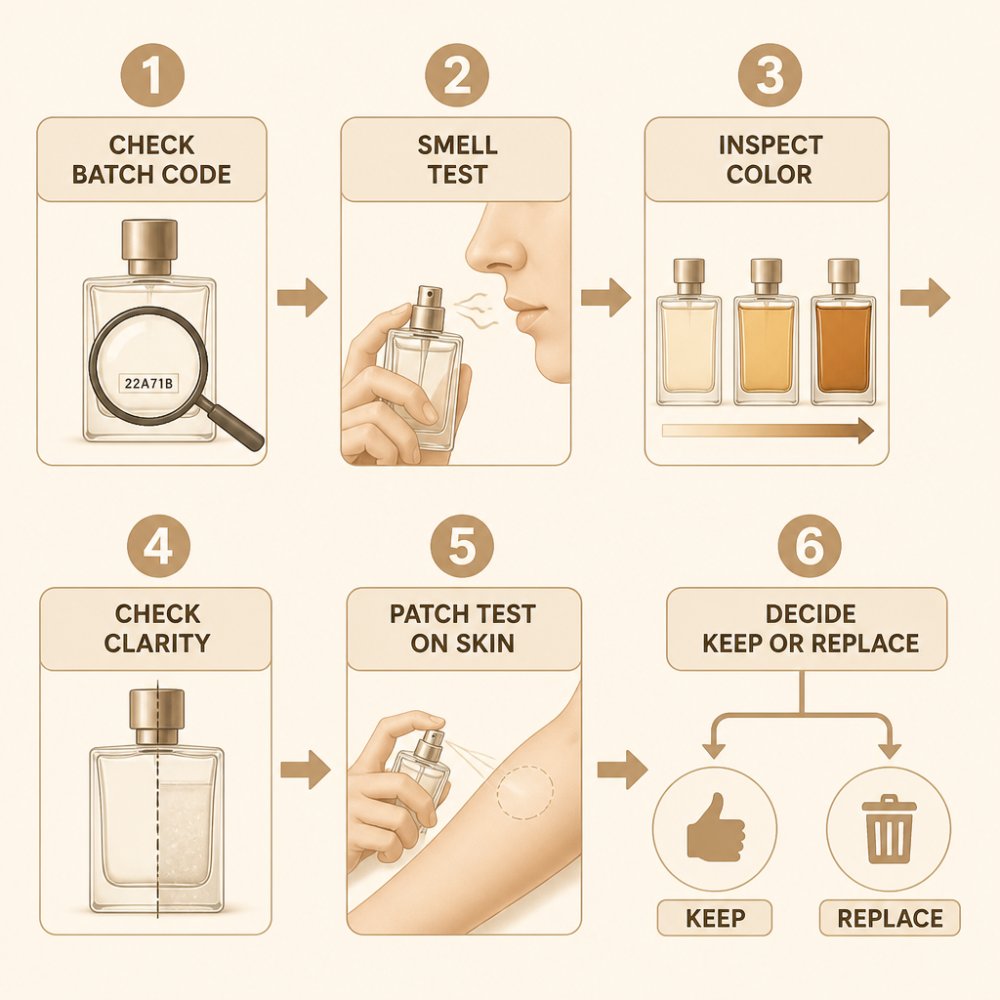
- Check the batch code. Confirm it matches the box and looks legitimate.
- Do the smell test. Spray once, wait a few minutes, and judge the dry-down.
- Inspect the color. Compare against a fresh bottle or the original shade.
- Check clarity. Look for cloudiness, sediment, or separation.
- Patch test. Spray your wrist and wait 24 hours before full wear.
- Decide. Keep it, use it as a room spray, or replace it.
Run this process before you toss a bottle, and before you trust a discounted one you are unsure about. It is the fastest way to separate a bottle that has simply aged from one that has actually turned.
Refresh Your Rotation With a New Bottle From Perfume Outlet
If your inspection ends with a bottle headed for the trash, the fix is a fresh one. At Perfume Outlet, we have offered authentic designer scents since 2006, with a large selection of men's and women's fragrances and expert help finding the right match.
Here is what we bring to the table:
- Guaranteed authenticity on every bottle we sell
- Expert guidance to help you pick a scent that fits your style
- A wide range of men's and women's fragrances
Browse the Perfume Outlet website to find your next signature scent.
Frequently Asked Questions
How long do colognes last before they expire?
An unopened bottle typically stays fresh for 3 to 5 years, while an opened bottle is usually best within 1 to 3 years, depending on the formulation and how it is stored. Citrus-heavy scents tend to fade faster than woody or oriental blends. Heat, light, and air exposure all speed up the process, so a bottle kept in a cool, dark cabinet will outlast one sitting on a sunny dresser.
What are the signs cologne has gone bad?
The clearest signs cologne has gone bad are a sour or vinegary smell, a sharp alcoholic opening that does not settle, a darker or cloudy appearance, and a scent that fades within minutes instead of hours. If your cologne once smelled warm and now smells like cleaning fluid, that is oxidation at work. Trust your nose first, then check color and clarity to confirm.
Can you use expired cologne, and is it safe?
You can often still use expired cologne if it smells and looks normal, but do a patch test first. Spray a small amount on your inner wrist and wait 24 hours to check for redness or itching. If the scent has turned sour or the liquid is cloudy, discard it. Never spray expired cologne on broken skin or near your eyes, and stop using it if any irritation appears.
How should you store cologne to help it last longer?
Store cologne in a cool, dark place away from direct sunlight and temperature swings, such as a closed cabinet or drawer rather than a bathroom shelf. Keep the cap tightly closed and avoid leaving the bottle near radiators or windows. Storing your bottle upright and minimizing air exposure inside the bottle also helps slow oxidation and extends shelf life.
