

How to Store Designer Cologne Properly: 2026 Guide
Table of Contents
- Why Proper Storage Keeps Designer Cologne Smelling New
- The Best Place to Store Cologne in Your Home
- How to Keep Cologne from Going Bad: 7 Storage Steps
- Should Cologne Be Stored in Its Box?
- Does Cologne Expire? Shelf Life by Bottle Status
- How to Tell If Cologne Has Gone Bad
- Refrigeration, Decanting, and Bottle Orientation
- Frequently Asked Questions
Last Updated: October 12, 2026
Why Proper Storage Keeps Designer Cologne Smelling New
Learning how to store designer cologne properly is the difference between a bottle that smells sharp for years and one that turns sour in months.
Fall and winter are the easiest seasons for storage, cool indoor air and lower humidity do most of the work. Summer is the hard part.
Fragrance is a mix of aromatic oils, alcohol, and water.
The Best Place to Store Cologne in Your Home
The best place to store cologne is a cool, dark, dry spot with a stable temperature, a bedroom drawer, a closet shelf, or a closed cabinet away from windows and heat sources. Steady conditions matter more than the exact spot you pick, because temperature swings do more damage than a consistently warm room.
Why the Bathroom Ruins Cologne
The bathroom is the worst room in the house for fragrance. Hot showers push humidity and temperature up and down daily, and steam gets into the bottle every time you open the cap. If your cologne lives on the sink, move it today, that is the most common mistake we see.
Drawer, Closet, or Cabinet: Picking Your Spot
Any of the three works if it stays cool and dark. Here is how to choose:
- Drawer: Best for daily-use bottles. Keeps light out completely.
- Closet: Good for a collection. Avoid shelves near exterior walls that get hot in summer.
- Cabinet: Best if it closes fully and sits away from the kitchen or laundry room.
How to Keep Cologne from Going Bad: 7 Storage Steps
These seven steps cover how to keep cologne from going bad, whether you own two bottles or twenty. Follow them in order and you remove the three main threats: heat, light, and air.
- Pick a cool, dry, dark location with a stable temperature. A bedroom drawer or closed cabinet works. Stability matters more than the exact number, a bottle swinging between 65°F and 85°F degrades faster than one sitting steady at 72°F. Aim for roughly 60°F to 75°F year-round.
- Keep the bottle in its original box. The box blocks light and cushions the glass. Ultraviolet light breaks down the aromatic compounds behind cologne's top notes, and the box is the cheapest UV shield you already own.
- Close the cap tightly after every use. Air exposure starts oxidation, the same reaction that turns an open bottle of wine sour.
- Store bottles upright. Lying them down lets liquid sit against the seal and seep. Over months, that contact weakens the gasket and lets air in even when the cap is tight.
- Keep them away from windows and heat sources. A windowsill in July can hit 110°F, and a radiator in January can push a bottle past 90°F, both well above the range cologne tolerates.
- Do not decant unless you have to. Every pour adds air to the bottle and introduces a new container that may not seal as well as the original. Decant only what you will use on a short trip.
- Rotate your seasonal scents. Store off-season bottles in the coolest spot you have. A heavier fall or winter scent like Born in Roma Intense Uomo by Valentino can sit untouched for months, exactly when proper storage matters most.
Seasonal Timing: What Changes Month to Month
Storage advice is not the same in every season. Here is how the calendar changes your routine:

- Late fall and winter: Indoor air is cool and dry, the easiest stretch for cologne. The main risk is heating vents and radiators, keep bottles a few feet away, and avoid cold garages or unheated rooms where temperatures dip below freezing.
- Spring: Humidity climbs and open windows let in more sun. Move bottles out of direct sun, and keep your storage drawer or cabinet away from bathrooms and kitchens where steam and cooking heat drift in.
- Summer: The hard season. Indoor temperatures climb, AC cycles on and off, and a car interior can hit 130°F in minutes. Move your collection to the coolest interior closet, keep bottles out of afternoon sun, and never leave cologne in a parked vehicle.
Travel and Seasonal Temperature Swings
Travel is where most bottles get damaged. A cologne left in a hot car or checked bag can degrade in a single trip. Pack bottles in a padded bag, keep them in your carry-on, and never leave them in a parked vehicle.
Seasonal swings matter too. In warm months, move your collection to the coolest interior closet. In winter, keep bottles away from heating vents and out of unheated spaces where temperatures drop below freezing.
Opened vs. Unopened: Different Advice for Different Bottles
A sealed bottle and a bottle you use every day need different treatment:
- Unopened, still in the box: Store it cool, dark, and upright. It can sit for years. Check the box for moisture or heat damage before opening.
- Opened, in regular rotation: Keep it in a closed drawer or cabinet, cap tight, upright. This is the bottle most at risk because it is exposed to air every time you spray.
- Opened, long-term storage: Seal the cap with plumber's tape or paraffin film, put it back in its box, and store it in the coolest, darkest spot you have. Label the date so you can track how long it has been sitting.
Should Cologne Be Stored in Its Box?
Yes, cologne should be stored in its box. The original packaging blocks light, one of the three main causes of scent degradation, and it protects the glass from knocks and keeps the cap tight. But the box is not magic, it is just a convenient light shield.
What the Box Actually Protects Against
A cologne box does three things:
- Blocks ultraviolet light. UV rays break down the aromatic compounds that give cologne its top notes. A cardboard box blocks essentially all of it. A clear glass shelf blocks none.
- Cushions the bottle. Glass chips and cracks, and a chipped bottle can leak or let air in. The box absorbs small knocks.
- Keeps the cap seated. A box that fits snugly prevents the cap from working loose in a drawer or bag.
What the box does not do is control temperature or humidity. A boxed bottle sitting on a sunny windowsill will still degrade. The box is one layer of protection, not a complete solution.
When the Box Is Not Enough
If your storage spot is already dark, a closed drawer, a cabinet with a door, a closet shelf, the box adds less value and mainly acts as a cushion and cap-keeper.
The box becomes essential when your spot gets ambient light. An open closet shelf, a dresser top, or a bathroom counter all let light in, and the box is the difference between a bottle that lasts years and one that fades in months.
MATCH POINT 1.69 OZ (50ml) Eau De Cologne Spray By LACOSTE For Men →
If You Already Threw the Box Away
Most people toss the box on day one. If you did, you have three alternatives:
- A closed drawer or cabinet. This does the same job as the box, it blocks light and keeps the bottle stable.
- An opaque storage bag or pouch. A felt or canvas pouch works well for travel and for bottles you keep on a shelf.
- A dedicated fragrance case. A closed case with dividers keeps bottles upright, blocks light, and prevents them from knocking into each other.
What you should not do is leave a bare bottle on an open shelf in a room that gets daylight, the most common storage mistake, and the one the box was designed to prevent.
Does Cologne Expire? Shelf Life by Bottle Status
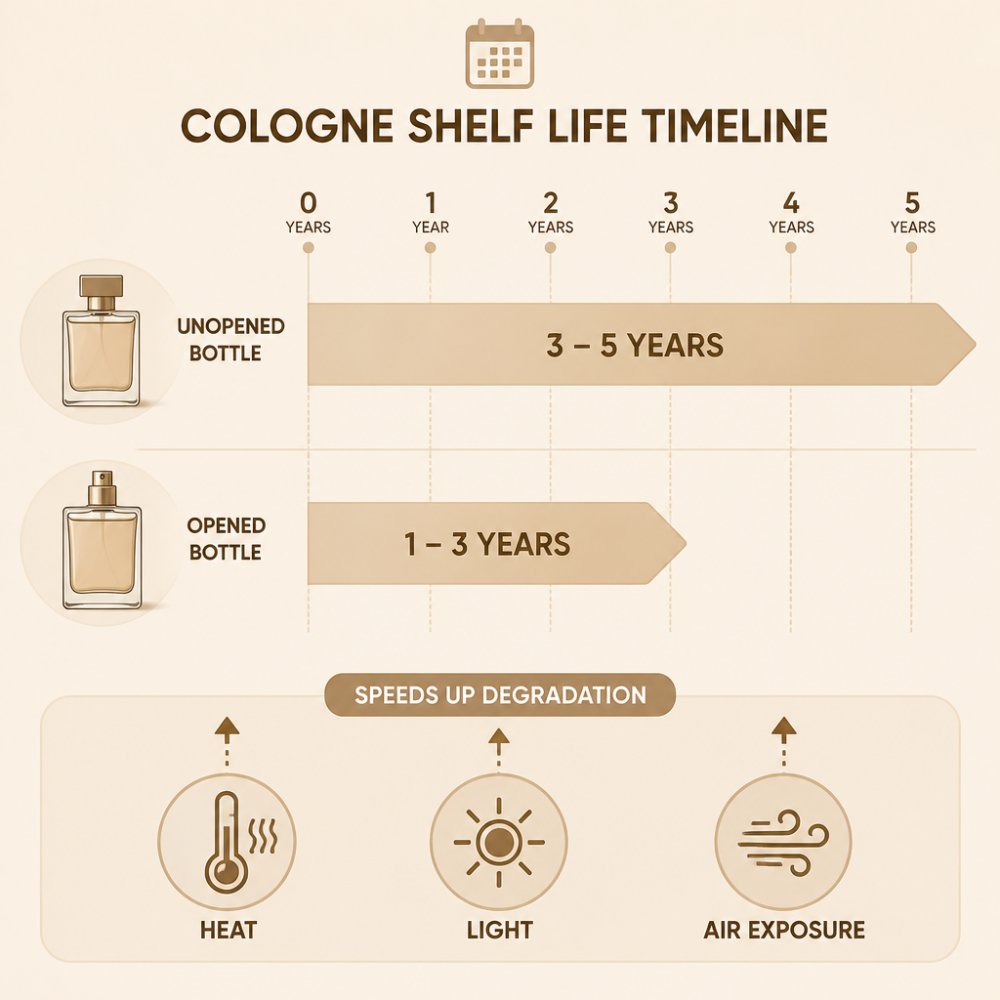
Cologne does expire, but the timeline depends on whether the bottle has been opened and how it was stored. An unopened bottle kept cool and dark can last several years.
(https://perfumeoutlet.us/products/acqua-di-gio-1-6-oz-50ml-eau-de-parfum-spray-by-giorgio-armani-for-men) deserves the coolest spot you can give it.How to Tell If Cologne Has Gone Bad
Cologne has gone bad when the top notes turn sharp or sour, the color darkens, or the scent fades within minutes of spraying. These are the clearest signs of degradation.
Watch for these signals:
- Sour or vinegar-like opening. The first spray smells off, not fresh.
- Color shift. A pale liquid turning amber or brown.
- Weak longevity. A scent that used to last all day now vanishes in an hour.
If a bottle fails two or more of these checks, it has degraded. It is not dangerous to wear, but it will not smell the way it should.
Refrigeration, Decanting, and Bottle Orientation
A refrigerator works only if the temperature stays steady and the bottle is sealed.
Decanting is usually a mistake. Every pour exposes cologne to air and adds a container that may not seal well. Decant only what you will use on a short trip.
Store bottles upright, never on their side. Lying a bottle down puts liquid against the seal, which can weaken it and let air in.
For a daily scent you reach for often, a simple upright bottle in a closed drawer is all you need. Our Match Point by Lacoste and 44 Gerrard Street by Atkinsons bottles are built for regular daytime wear, so keeping them within easy reach and out of the light is the whole routine.


Frequently Asked Questions
Where should you store designer cologne?
The best place to store cologne is a cool, dark, dry spot with a stable temperature, like a bedroom drawer, closet shelf, or closed cabinet away from windows and heat sources. Avoid the bathroom because shower steam causes temperature and humidity swings that break down fragrance oils. Keeping the bottle in its original box adds another layer of protection from light and air.
Should cologne be stored in its original box?
Yes, storing cologne in its original box helps preserve scent quality. The box blocks light exposure that degrades fragrance molecules and adds a barrier against dust and humidity. It also keeps the bottle upright and protects the cap from loosening. If you tossed the box, a dark drawer or closed cabinet works nearly as well.
Does cologne expire, and how long does it last after opening?
Cologne does expire, though it fades gradually rather than spoiling overnight. Unopened bottles typically last 3 to 5 years when stored away from heat and light. Once opened, most colognes stay at their best for 1 to 3 years. Citrus-forward scents tend to fade faster than oriental or vanilla-based fragrances like Valentino Born in Roma Intense Uomo.
How can you tell if cologne has gone bad?
Signs cologne has gone bad include a sharp alcohol smell when first sprayed, a sour or vinegar-like top note, a darker yellow or brown tint, and scent that fades within minutes instead of hours. If the liquid looks cloudy or has visible particles, it has degraded. A quick test: spray on a paper strip and smell it after 30 minutes. If the dry-down smells off, the bottle is past its prime.
A good bottle deserves better than a steamy shelf. Building a simple storage routine, a cool drawer, the original box, a tight cap, protects every scent you own. At Perfume Outlet, we have helped fragrance lovers find authentic designer cologne since 2006, with guaranteed authenticity, outlet pricing, and a wide selection of men's and women's scents. Shop now and give your next bottle the storage it deserves.