


Best Niche Perfume Brands for Collectors
Table of Contents
- What Defines a Niche Perfume Brand
- Quick Comparison: Top Niche Perfume Brands
- The Difference Between EDT and EDP
- Best Niche Perfume Discovery Sets for Beginners
- How to Store Niche Perfumes and Preserve Quality
- Building an Investment-Grade Fragrance Collection
- Where Each Brand Wins for Different Collector Goals
- Frequently Asked Questions
Last Updated: September 25, 2026
What Defines a Niche Perfume Brand
A niche perfume brand is an independent or luxury fragrance house that prioritizes artistic expression, ingredient quality, and limited production over mass-market appeal. Unlike designer fragrances sold in department stores, niche brands emphasize unique compositions, rare raw materials, and distinctive olfactory profiles that challenge conventional scent preferences.
Niche perfumers focus on artistry rather than celebrity endorsements, typically using high-concentration formulations (eau de parfum and extrait de parfum) that deliver superior longevity and reveal top, heart, and base notes in a deliberate progression known as the fragrance pyramid.
A niche perfume brand sources rare ingredients like Omani frankincense, Bulgarian rose absolute, and Indian sandalwood in small production runs. Batch variation and scarcity, combined with artistic intent, drive both appeal and investment value.
At Perfume Outlet, we understand that the best niche perfume brands deliver something mass-market fragrances cannot: a personal connection to the scent's composition and the perfumer's vision. Whether you're building your first collection or curating a serious investment portfolio, understanding what defines a niche brand is the first step.
Quick Comparison: Top Niche Perfume Brands
| Brand | Strength | Best For | Entry Price Range |
|---|---|---|---|
| Maison Francis Kurkdjian | Sophisticated, widely recognized | Collectors seeking established luxury staples | $235+ |
| Amouage | Rare ingredients, complex layering | Those prioritizing ingredient quality and longevity | $360+ |
| Xerjoff | Visual presentation and artistic range | Collectors who value display aesthetics | $200+ |
| Nishane | High-performance extraits | Seekers of distinctive, long-lasting scents | $195+ |
| Essential Parfums | Quality without luxury markup | Budget-conscious collectors wanting niche quality | $75+ |
| Diptyque | Artistic storytelling and lifestyle integration | Those who want fragrances tied to broader aesthetics | $125+ |
| Fragrance Du Bois | Sustainable oud specialization | Oud enthusiasts prioritizing ethical sourcing | $300+ |
| BornToStandOut | Bold, unconventional concepts | Collectors seeking conversation-starting scents | $160+ |
| Initio Parfums Privés | Intense, seductive formulations | Those wanting powerful projection and presence | $250+ |
The Difference Between EDT and EDP
Eau de toilette (EDT) contains 5-15% fragrance oils, while eau de parfum (EDP) contains 15-20%. This difference creates significant real-world variations in longevity and price.
EDT lasts 3-5 hours; EDP delivers 6-8+ hours, making it more economical per wear despite higher cost. Higher concentration also allows fuller development, with base notes lingering longer to reveal the fragrance's true character.
Many niche brands focus on EDP and extrait de parfum (20-40% fragrance oils), which offers the deepest olfactory experience, lasting 12+ hours and commanding premium pricing.
Best Niche Perfume Discovery Sets for Beginners
Discovery sets let you explore multiple scent profiles before committing to full-size purchases. Many niche perfume brands offer these sets specifically for this purpose.
Sample across fragrance families (floral, woody, oriental, citrus, gourmand, spicy) to identify preferences. Look for sets with 4-6 scents from a single house to understand the brand's aesthetic.
The Decanting Strategy: Building Collections Without Full Bottles
Decanting, purchasing 2-5ml samples from specialized services, costs 70-80% less than full bottles and reduces financial risk of poor purchases.
A $250 full bottle yields 20-25 decants of 4ml, costing roughly $40-50 each. Licensed decant services purchase full bottles and subdivide them legally, making this an accepted collector practice.
Source decants from established vendors through fragrance forums and dedicated retailers. Verify proper storage (cool, dark conditions) and clean glass vials with airtight caps, as poor practices degrade quality.
Many collectors build breadth with 15-20 decants from different brands before purchasing full bottles, transforming collecting from gamble into methodical curation.
Discovery Sets from Niche Brands
Official discovery sets from niche houses provide authenticity assurance and printed fragrance notes. Maison Francis Kurkdjian's sets include 5-6 fragrances for $60-80; Nishane offers similar collections.
Prioritize sets with diverse concentration levels (EDT and EDP) and spanning the brand's range to compare how concentration affects scent development.
Combine official discovery sets from 2-3 houses with decants from 5-10 brands ($200-300 total) for exposure to 20-30 fragrances. After 2-4 weeks, patterns emerge revealing your preferences before purchasing full bottles.
How to Store Niche Perfumes and Preserve Quality
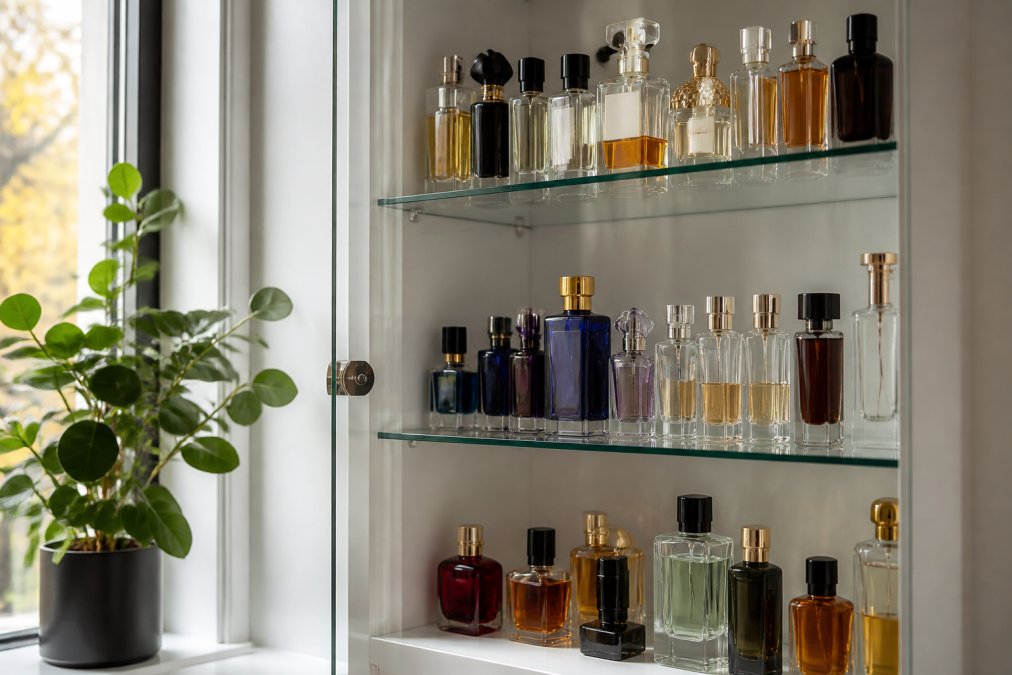
Niche perfumes, with higher concentrations of volatile compounds and rare materials, are sensitive to temperature, light, and humidity, all of which degrade fragrance over time.
Store niche perfumes at 55-65°F in cool, dark locations (bedroom closet, basement, fragrance cabinet). Avoid bathrooms, direct sunlight, and fluorescent lighting, which degrade citrus and floral notes.
Quality niche brands use UV-protective glass and airtight caps. Store bottles upright in cool, dark drawers or cabinets, not in cardboard boxes.
Vintage formulations represent significant collector value and require extra care. Store in sealed plastic bags or temperature-controlled safes to minimize air exposure.
Training Your Nose: Developing Olfactory Literacy
Developing your olfactory palate deepens appreciation. Most collectors begin with untrained noses, lacking vocabulary to detect differences between rose varieties or recognize fragrance evolution across wear time.
Olfactory training is a learnable skill separating casual buyers from serious collectors, enabling detection of subtler notes and appreciation of compositional complexity.
Olfactory Fatigue: Your nose desensitizes after 15-20 minutes. Test fragrances in cycles: wear 15 minutes, break 10 minutes, return. Many collectors test morning, midday, and evening to catch different scent phases.
Fragrance Pyramid: Track transitions across top notes (5-15 min), heart notes (30 min-4 hrs), and base notes (4+ hrs). Document changes at 5, 15, 60, 240, and 480 minutes to train your nose to recognize compositional structure.
Vocabulary: Use fragrance wheels and notes lists to develop specificity beyond "smells good." Study notes before wearing, then actively listen for them during wear to accelerate olfactory education.
Isolation Testing: Dedicate days to single fragrances, wearing one from morning to evening. Avoid multiple fragrances daily during training to prevent olfactory confusion.
Comparative Testing: Test fragrances within families (floral, woody, oriental) on different days to recognize subtle differences and understand why one rose feels "classical" versus "modern."
Concentration Impact: Test the same fragrance in EDT and EDP if available. Higher concentration affects olfactory character, not just longevity, a disliked EDT may become a favorite in EDP.
Maintain fragrance journals documenting impressions across multiple wearings. Patterns reveal your preferences, transforming random acquisitions into a coherent, intentional portfolio reflecting genuine preferences rather than hype.
Building an Investment-Grade Fragrance Collection
Investment-grade collections treat fragrances as appreciating assets. Limited editions, discontinued scents, and fragrances from respected perfumers hold or increase in value.
Scarcity plus demand equals appreciation. Discontinued fragrances command premiums; limited-edition releases from Xerjoff or Amouage often appreciate within months.
Research which niche perfume brands command secondary market value: Maison Francis Kurkdjian (older batches), Amouage (heritage releases), and Nishane (Extrait formulas) show consistent appreciation. Study completed sales on collector forums before purchasing.
Batch variation actually enhances investment value for certain fragrances. Older formulations, particularly those predating reformulations, become increasingly rare. A 2015-batch bottle of a fragrance that was reformulated in 2023 may sell for 2-3x retail. This creates an incentive to purchase full bottles rather than samples, and to preserve them carefully.
Document your collection meticulously. Record purchase dates, batch codes, bottle condition, and storage location. This documentation supports future resale and helps you track which fragrances appreciate over time. Many serious collectors photograph their bottles and maintain spreadsheets tracking cost basis and estimated current value.
Where Each Brand Wins for Different Collector Goals
Different niche perfume brands serve different collector objectives. Understanding these distinctions helps you allocate your collection budget strategically.
For Ingredient Quality and Complexity: Amouage stands alone.
Frequently Asked Questions
What makes a niche perfume brand different from designer fragrances?
Niche perfume brands prioritize artistic composition and raw material quality over mass-market appeal. They typically use higher fragrance concentrations, source rare or expensive ingredients, and limit production runs. Unlike designer fragrances created for broad appeal, niche brands often feature complex scent profiles with stronger sillage and longevity. Many niche houses employ master perfumers who craft fragrances as artistic expressions rather than commercial products.
Which niche perfume brands offer the best longevity and projection for collectors?
Amouage, Nishane, and Initio Parfums Privés lead in performance metrics. Nishane specializes in high-concentration Extrait de Parfum formulas with exceptional staying power. Amouage's complex compositions deliver unmatched sillage and can last 10+ hours on skin. Initio focuses on potent, layered formulas designed for sustained projection. For collectors prioritizing performance, these houses consistently outperform both designer and mass-market alternatives.
Are niche perfumes worth the investment for serious fragrance collectors?
Yes, for collectors seeking longevity, uniqueness, and potential resale value. Niche fragrances typically last longer than designer options, contain higher concentrations of quality ingredients, and develop devoted followings that support secondary market resale. Limited editions and discontinued batches from houses like Xerjoff and Amouage appreciate over time. However, value depends on your priorities: if you want versatile daily wear, Essential Parfums offers niche quality at lower price points.
How do I start building a niche perfume collection without making expensive mistakes?
Begin with discovery sets and decant samples from established houses like Diptyque, Essential Parfums, or Nishane. Decanting allows you to test fragrances before committing to full bottles. Study fragrance pyramids and scent notes to understand your preferences: woody, floral, gourmand, or oriental profiles. Join fragrance communities to learn about batch variations and vintage formulations. Consider your climate and lifestyle when selecting base notes, oud-heavy fragrances suit cooler months, while citrus and fresh florals work year-round.